Not just a teacher shortage
While the oft-discussed teacher shortage looks different in different places, Elizabeth’s leader noted that teaching positions aren’t the only ones with a spotlight on them.
“The reality is we are all impacted by this teacher shortage, and it isn’t just teachers — it’s paraprofessionals, it’s bus drivers, it’s cooks, it’s everything,” Dallas said.
Cherry Creek — a district that includes much of Centennial, south Aurora and nearby suburbs — said in a statement it is “fortunate in that we have not seen a significant decline in teachers” since the pandemic began.
Cherry Creek had 3,405 teachers in the 2019-20 school year, and it counted 3,318 teachers in the 2021-22 year, according to the state’s data online.
“The pandemic definitely made the shortage of special education teachers and paraprofessionals more dire,” said Smith, the Cherry Creek spokesperson. “We are able to support all classrooms and needs right now, but we are also still seeking to hire more staff in this area.”
For this school year, the Cherry Creek district gave all teachers a salary increase via movement in “steps and lanes” and with a 3% raise, Smith said.
Traditionally, teachers have been paid on "step and lane" salary schedules where teachers earn raises for each additional year of experience, or "steps," and can move to higher "lanes" by earning additional education credits and degrees, according to the National Council on Teacher Quality.
Smith added: “Certainly, we believe housing costs in the Denver metro area are part of the driving force behind the teacher shortage in Colorado.”
In Clear Creek County, which doesn’t include much flat land where homes can be built, the district recently sold Golddigger field and other pieces of land it considered “excess property,” Quanbeck said. At least part of the change was a move to support local teachers’ ability to live close to where they work in Clear Creek.
The former “Golddigger” property saw plans to feature some “workforce housing,” where at least some of the units are below market rate, and some are available to the district’s educators, Quanbeck said.
“I just am glad I’ll be able to help teachers with housing because when they drive through two or three other districts where they can make $5,000 to $10,000 more” it can be difficult to work in Clear Creek, Quanbeck said. Many teachers live outside the county and commute, she said.
In the Douglas County School District in the south Denver metro area, officials are considering larger pay increases to incentivize more teachers to remain in the district.
The district will ask voters for a “mill levy override” — a tax increase — in November, an effort that will be “100% dedicated to increasing teacher and staff pay,” said Erin Kane, the district’s superintendent.
“We really are doing everything we can to make sure we’re paying our teachers as competitively as possible,” Kane said.
The move comes as other Denver-area districts have approved or are considering raises for teachers or other staff. Douglas County’s proposed pay increase would give teachers up to a 9% increase in pay, according to Kane.
Douglas County had 3,662 teachers as of February 2020 and has 3,522 teachers as of late August this year, according to the district. It’s a decrease that Kane said was not a significant drop. Douglas County’s teacher count tracks with its student count, Kane said.
Looking ahead, Douglas County district officials are working on programming at the high school level to help develop future teachers who can stay in the county, Kane said.
“We’re working through what it’s going to look like, but it’s a teacher academy in the hope that our kids can get a college credit toward a teaching degree and hopefully come back and teach in Douglas County,” Kane said.
Student populations a mixed bag closer to Denver
The older parts of school districts in the south metro area can contribute to falling student enrollment, but at the same time, newer neighborhoods in other parts of the same districts can provide new students.
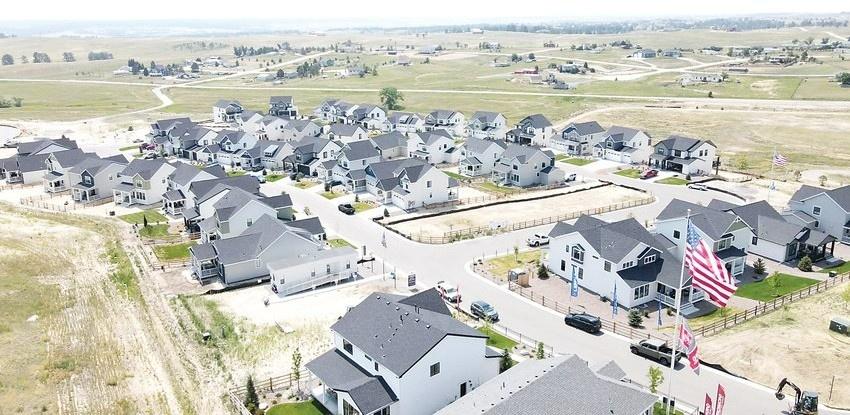
Fueling growth in the Cherry Creek district’s east side, new homes were still being built in the east Centennial and far-southeast Aurora areas, but enrollment had been dropping in the district’s west side and other pockets even before the pandemic.
Likewise, some Douglas County areas see “tremendous growth” where young families are moving in. But on the other hand, there are areas like in Highlands Ranch where young families moved in 20 to 25 years ago and never left, meaning today’s young kids are not replacing the ones that grew up there before, Kane said.
Meanwhile, the two major drivers of falling enrollment in Denver are declining birth rates and rising home prices that push families out of the city and prevent new ones from moving in, the news outlet Chalkbeat wrote in 2021 about the Denver Public Schools district.
“In the few years before 2020, we were pretty flat,” Kane said of Douglas County. “Our enrollment’s been flat for a while because we have areas of our district (that have) been growing and areas of our district that have been aging out.”
Douglas County counted 67,305 students in the 2019-20 school year, according to state data. The district’s count was 63,249 as of late August this year, according to numbers provided by the district.
The drop in enrollment came as districts across the state saw similar trends, according to Kane. “A lot of kids (were) moving into home schooling,” she said. The district generally can’t track all the students who went into home schooling, she added.
“We lost a lot of kids due to not having some of the schools open five days a week” during the early part of the pandemic, Kane said.
Part of Douglas County’s decrease in enrollment was due to a unique drop in students from HOPE Online closing its elementary operations, which accounted for a decrease in about 1,400 students, according to Kane.
HOPE Online was authorized by Douglas County, but they had students across the state who were factored into Douglas County’s student count, Kane said.
But officials anticipate some growth in both the student count and teacher count over the next few years as Douglas County housing development continues.
Cherry Creek district in Arapahoe County counted 56,172 students in the 2019-20 school year and 53,558 in 2021-22, according to state data. The district didn’t respond by press time regarding how many students it currently has.





.jpg)