Note: This story has been updated to reflect the changes made by the museum following the City and County of Denver's announcement that it would be moving to "Level Red" on the state's COVID-19 dial dashboard. Denver has since returned to Level Orange.
DENVER — On October 25, visitors were able to visit the Denver Art Museum and take in some of the most iconic paintings of two of Mexico’s most revered artists: Frida Kahlo and Diego Rivera.
The exhibit, which is available to the public until January 24, 2021 is titled “Frida Kahlo, Diego Rivera, and Mexican Modernism.” Most of the over 150 pieces of art on display come from the Jacques and Natasha Gelman Collection. Other artists featured include Lola Álvarez Bravo, Gunther Gerzso, María Izquierdo, and Carlos Mérida.
However, due to COVID-19 cases rising in Denver, the museum has had to change its visitor policy. The museum will begin "rolling ticket sales" in seven-day increments.
"For example, if you would like to visit on Tuesday, Dec. 8, you can purchase your ticket starting at 9 a.m. on Tuesday, Dec. 1," the museum wrote on Facebook.
Tickets for the first week of December go on sale Monday, November 30, at 10 a.m. More information is available here.
Those who are unable to get tickets to the exhibit can still enjoy the art. Denver Art Museum has a bevy of online resources like a virtual visit and an illustrated art walk. More online resources are available here.
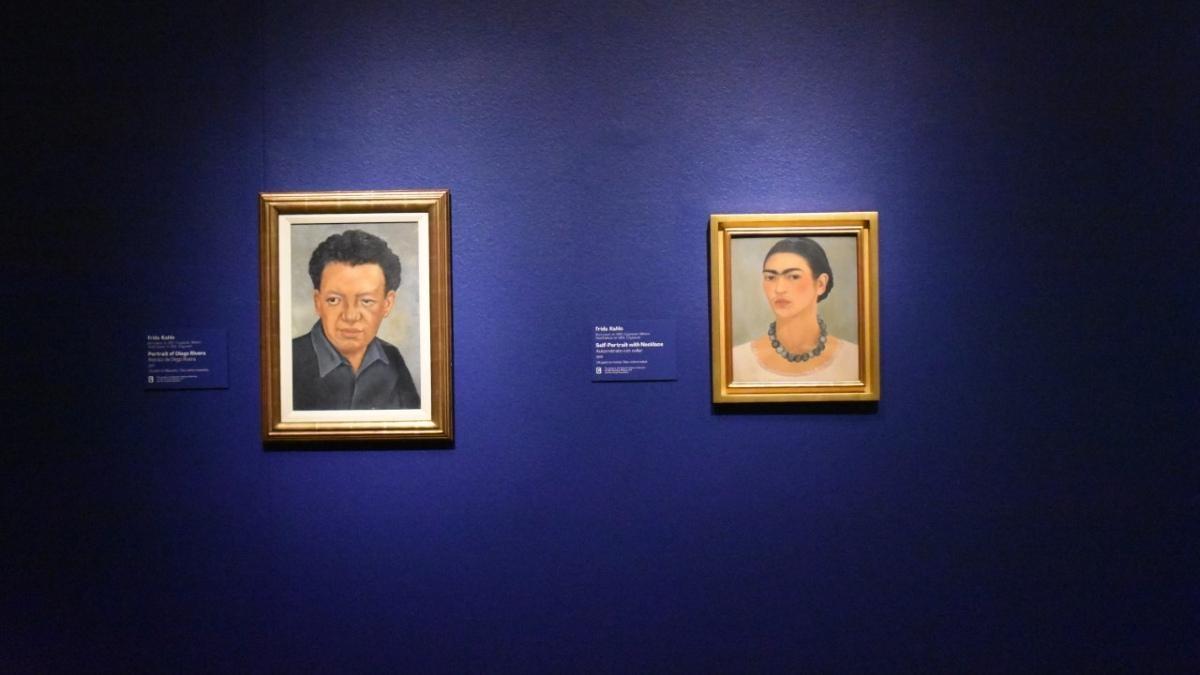
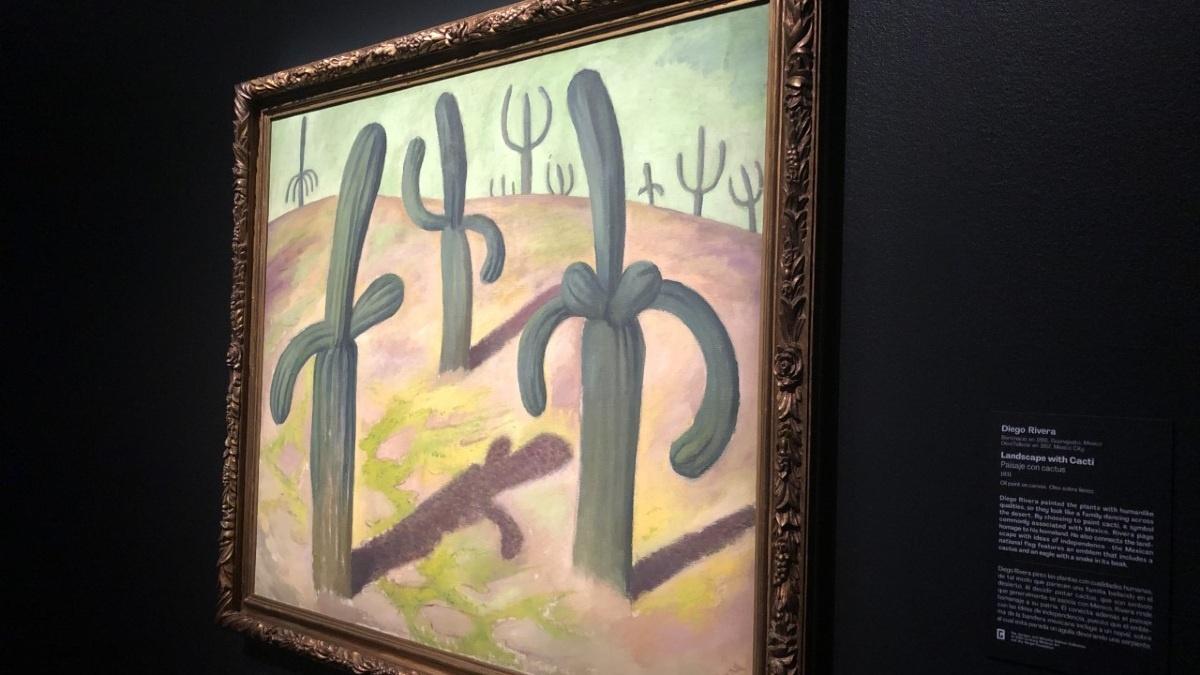
Frida Kahlo and Diego Rivera's celebrated works on display.
Film producer Jacques Gelman and his future wife Natasha Zahalkaha met in Mexico City after leaving Eastern Europe ahead of World War II. The success of Gelman’s film production career allowed the couple to commission and collect art from the likes of Kahlo and Rivera. The artwork in the Denver Art Museum’s current exhibit focuses on Mexican Modernism, an artistic movement that began after the Mexican Revolution ended.
“The story of this exhibition begins in 1920 when, after ten years of bloody civil war the modern Mexican state emerged as a democratic republic,” said Rebecca Hart, the Denver Art Museum’s Curator of Modern and Contemporary Art. “Filled with optimism, this nation combined pre-Hispanic traditions, colonial legacies, and modern ideals. Artists sifted through layers of time and memory to create and give a new visual form to a new nation.”
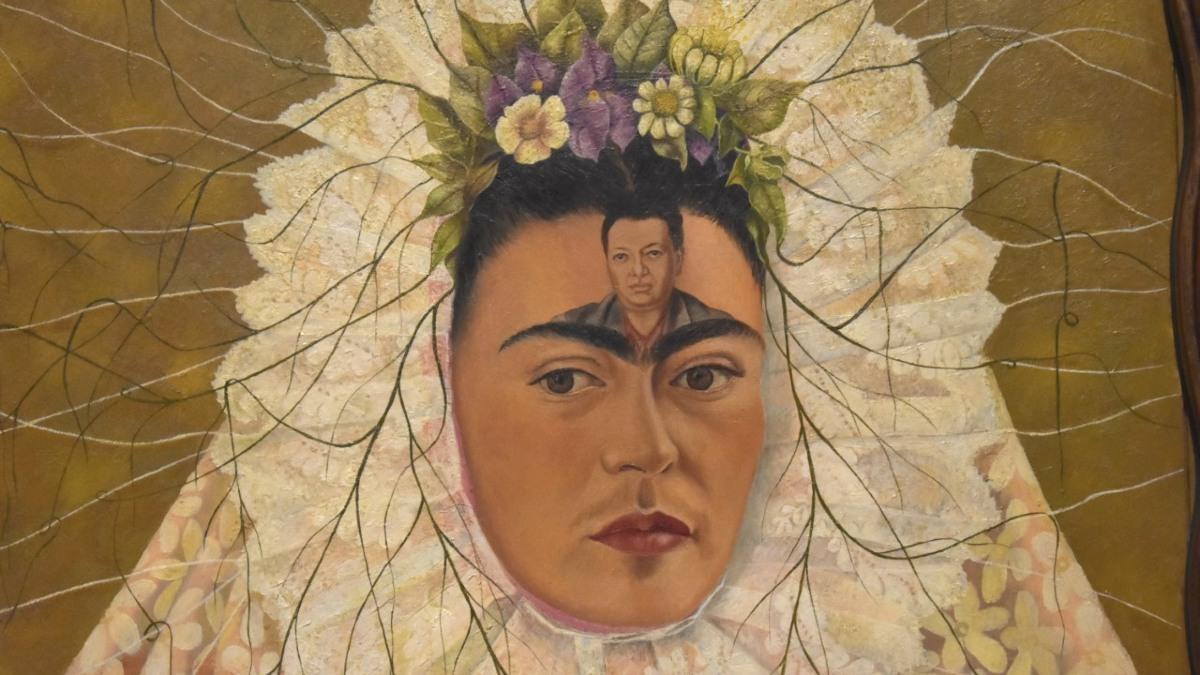
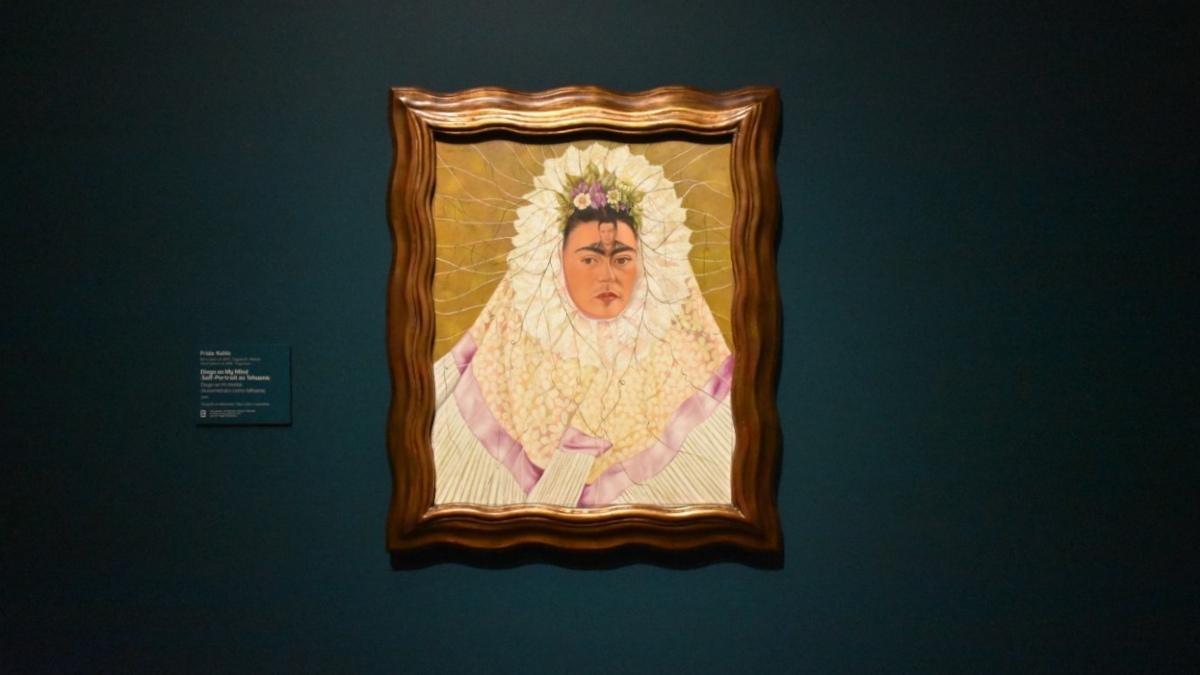
A quote from Rivera is on the wall of the exhibit: "The secret of my best work is that it is Mexican."Those familiar with Kahlo and Rivera’s work will likely recognize some of the paintings on display, like Kahlo’s 1943 paintings Self-Portrait with Monkeys and Self-Portrait as a Tehuana (Diego on my Mind), which includes a smaller portrait of Rivera sitting on Kahlo’s famous brow. Describing that painting, Christopher Knight of the Los Angeles Times wrote, “Kahlo, like a magnificent prisoner, shows herself both blessed and cursed by her intimate attachment to Rivera.”
Visitors to the exhibit can expect to learn a lot about Kahlo and Rivera’s personal lives. The two were married for ten years before Rivera’s unfaithfulness led to a divorce. They remarried the following year and remained together until Kahlo’s death 14 years later at age 47.
Just as powerful as the artwork on display are the photographs and videos of Kahlo, Rivera, and their contemporaries. A 1936 photo shows Kahlo and Rivera, fists in the air, at an Antifascist rally in Mexico City. Several other photos show Kahlo in her garden and bedroom in Coyoacán, a municipality of Mexico City.
A 1939 photo by Nickolas Murray titled "Frida Kahlo with Olmec figurine."
Hart said it was a goal to also highlight other artists of the Mexican modernism movement.
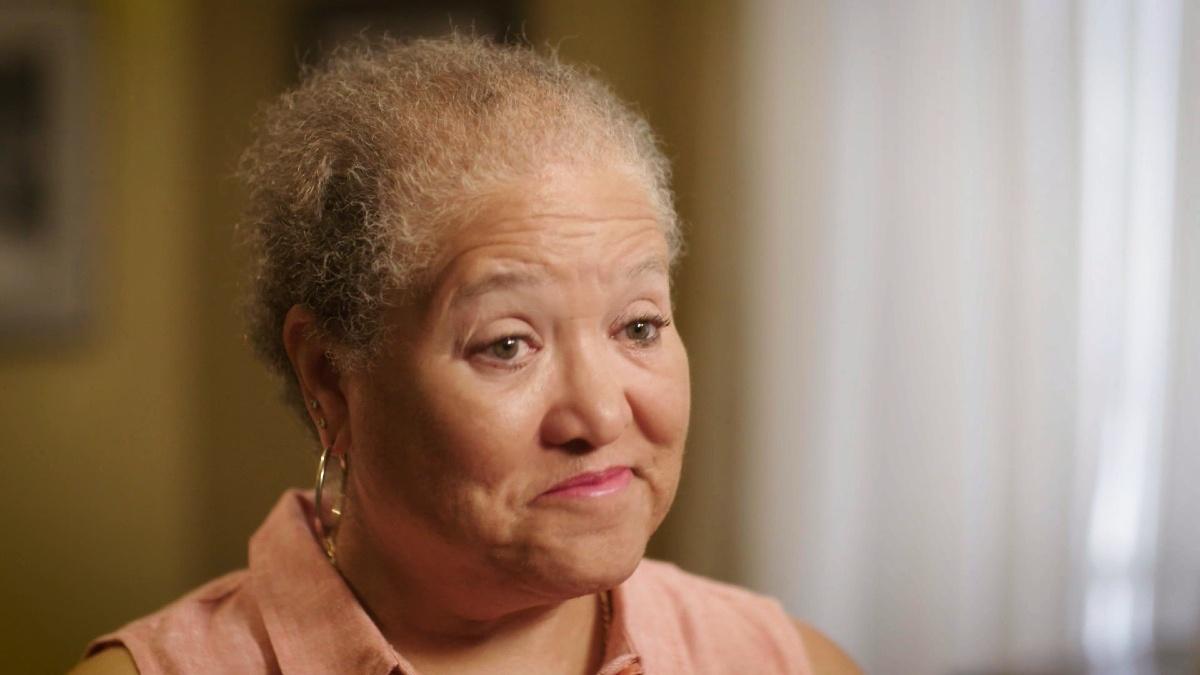
“What we were trying to do is to tell a story that was inclusive of the other modernists… and was also representative of the women. Because we all know Frida,” Hart said. “And yet María Izquierdo...she showed with Diego Rivera in 1929. She showed in LA, New York, and Paris in the 1930s. She was the famous artist. So we wanted to build a story that was very inclusive.”
About midway through the exhibit, enchanting home videos of Kahlo are projected on the wall. The original 16 mm film was digitized for the display. The video was initially going to be at the beginning of the exhibit, but museum staff said they were nervous it would lead to clustering, which would not be safe during the pandemic.
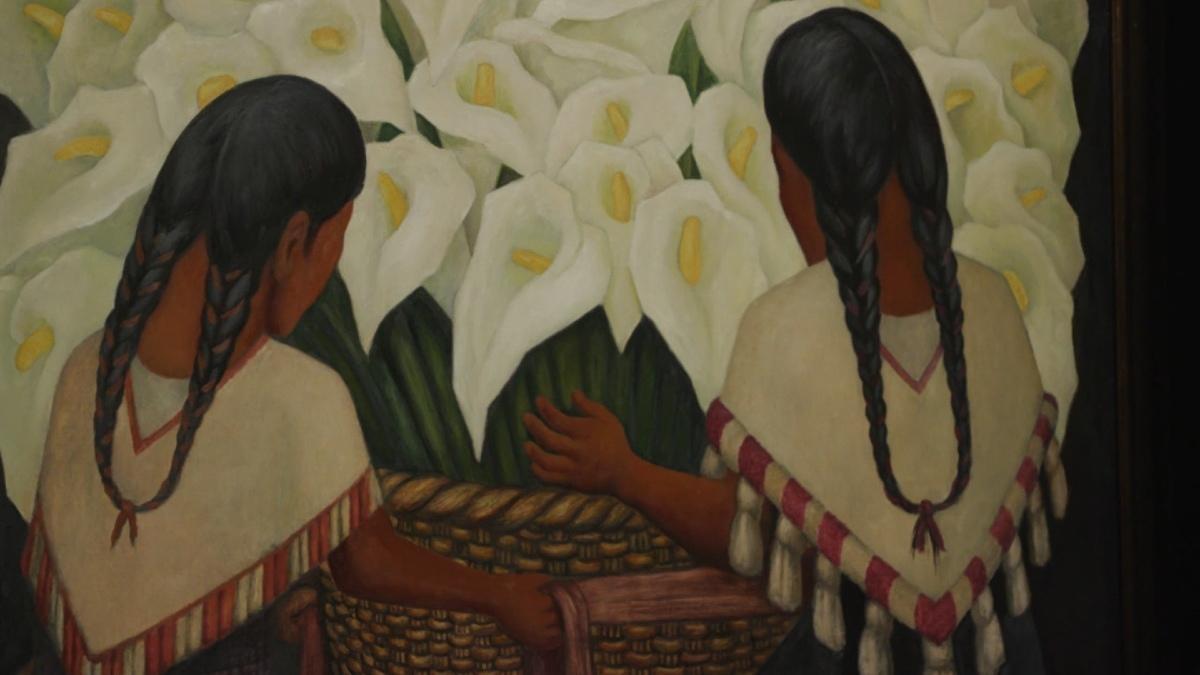
The exhibit will feature a one-way walking pattern to encourage social distancing. The artwork is also spaced out a bit more than usual to avoid crowding, so museum staff say to "savor" each piece of art before moving on. The walls of the first section of the exhibit are painted very dark, and at the end of the corridor hangs Rivera’s famous 1943 painting, Calla Lily Vendor. The exhibit becomes brighter as you move forward.
When the City and County of Denver announced on October 27 that it was moving to "Safer Level 3" because of a rise in COVID-19 cases, the museum said it would make "operations and visitor capacity adjustments."
Ticketholders for Frida Kahlo, Diego Rivera and Mexican Modernism who are scheduled to visit starting on Wednesday, Oct. 28, will be contacted in advance of their visit, which may include rebooking for a later date, a refund or keeping their selected date to view the exhibition.
Heinrich said they are hoping to add some extra hours so that more people will be able to see the exhibit. He said because of the gathering restrictions due to COVID-19, attendance will be “extremely light,” about 600 visitors a day.
Heinrich added that thankfully, there have been no cases of COVID-19 among staff or visitors to the museum so far. He then knocked on wood.
“I’m grateful that the museum’s ventilation system, which was originally designed to protect our art, provides the highest standard of air quality for our visitors,” Heinrich said.
For more COVID-19-related guidelines, visit this link.
Because they want as many people to enjoy this exhibit as possible—even if people can’t make it in person—the staff of the Denver Art Museum has organized “Mexican Modernism in Context,” a four-part online course that digs deeper into the exhibit. Register for the courses here.
Frida Kahlo, Diego Rivera, and Mexican Modernism
1 / 5
Share This Gallery
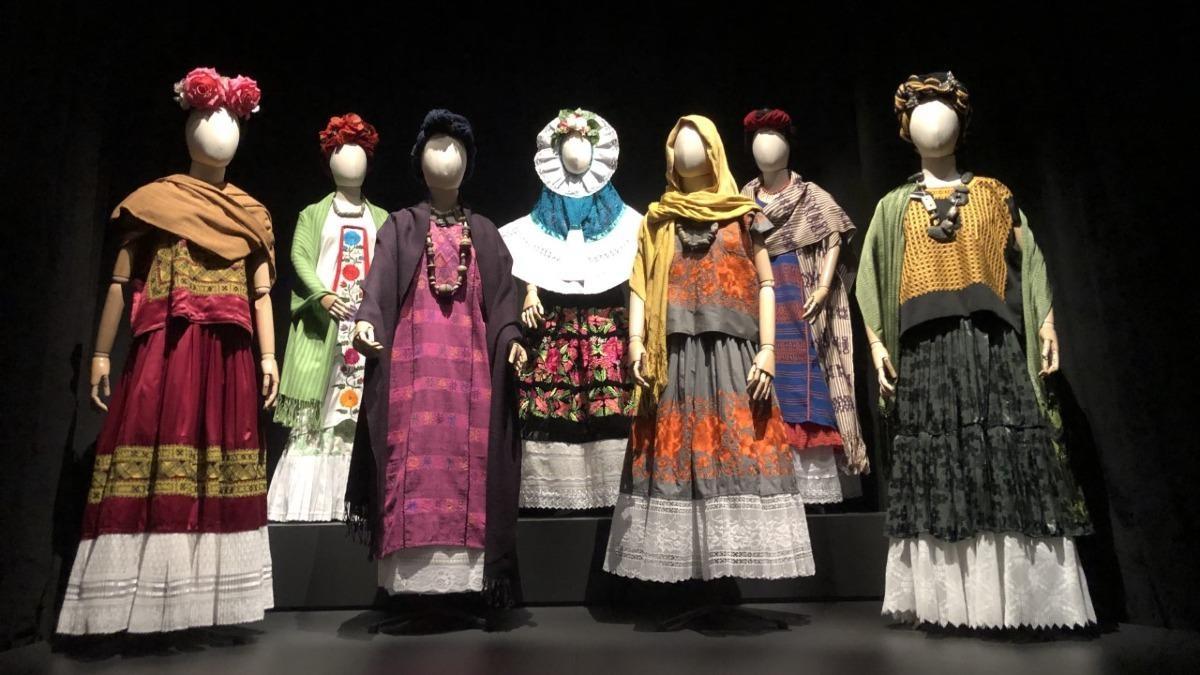
Kahlo's artistic expression wasn't limited to the canvas.
2 / 5
Share This Gallery
Portraits of Rivera and Kahlo, painted by Kahlo.
3 / 5
Share This Gallery
Rivera's 1931 painting, "Landscape with Cacti."
4 / 5
Share This Gallery
Kahlo's 1943 painting "Self-Portrait as a Tehuana (Diego on my Mind). She completed the piece after the two remarried.
5 / 5
Share This Gallery
Rivera's "Calla Lily Vendor" is the first painting you'll see in the exhibit.