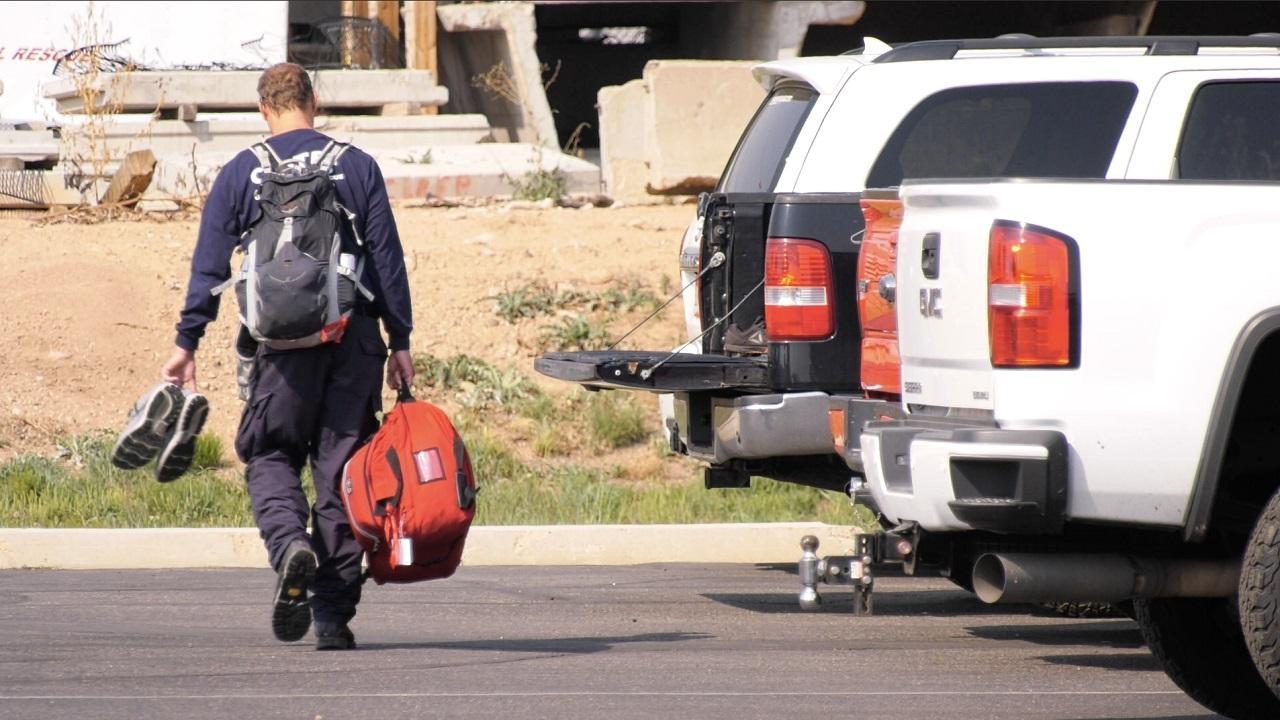
Parker and his other teammates described witnessing significant destruction when they arrived in Louisiana. They left on August 28—a day before the hurricane made landfall—and drove more than 20 hours from Colorado.
“When we got down there, we actually weathered the storm in Lafayette. It really was like a bad thunderstorm in Colorado,” task force member Brian Daley described.
When the team first arrived, they were sent out to recovery efforts in the suburbs of New Orleans. That meant team members performed door-to-door searches and preliminary damage assessments.
“We got into the areas of Jefferson Parish, south of the city of New Orleans, and the damage was very similar to after what we get from hailstorms or huge thunderstorms,” said Daley. “There were trees down, power lines are down, a lot of debris in the streets. It wasn't really until we got down to Grand Isle, which was literally the eye of the storm, that we saw the total devastation associated with it.”
After initial efforts near New Orleans, the team was called to Grand Isle, a small island off the coast of Louisiana.
“There was not a building there that wasn’t affected,” said Daley. “Water or wind damage or both, or the home is just gone.”
The damage on that island was significant when the team arrived: all utilities were down, homes were “obliterated,” and roads were covered in three to four feet of sand.
“They build these houses on stilts that are 15 feet, and we’re driving through areas where half of it [has] got sand in it,” said Daley.
“Driving through all of that destruction just… house after house, tree after tree, fence after fence, utility pole after utility pole…that was really striking to see what kind of recovery effort they have to go on down there. And they’re going to be working on that for a while,” said Parker.



.jpg)