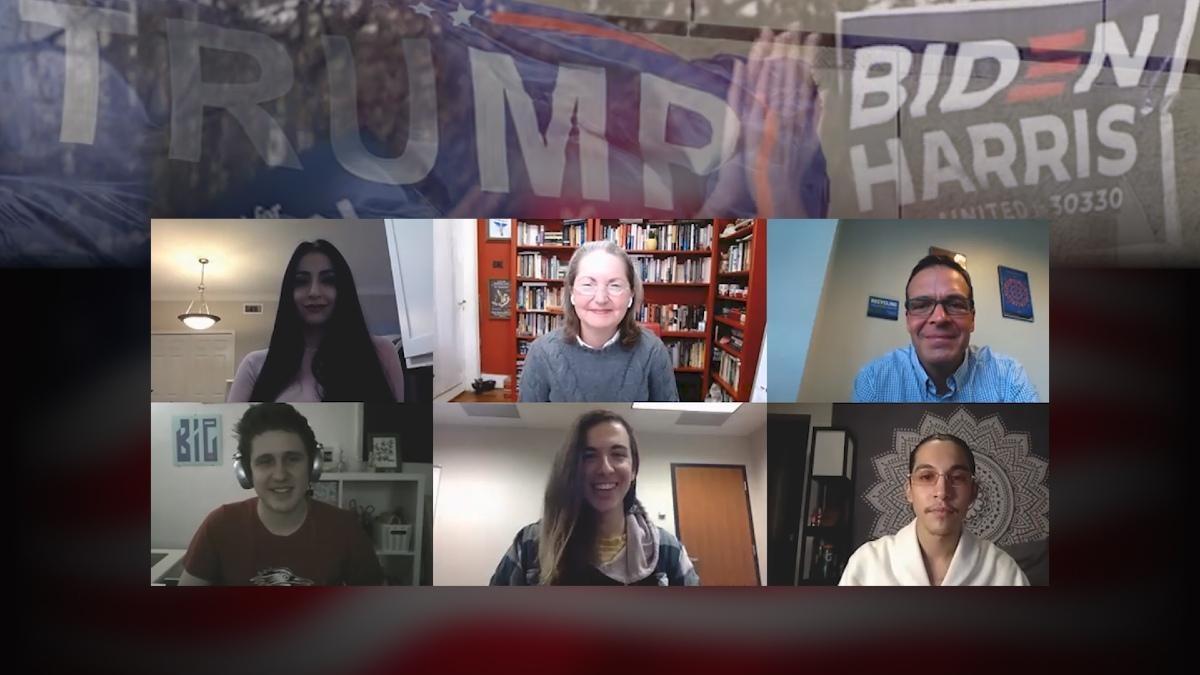
Kieran Boes is planning to graduate this spring. He also plans to “get curious” with people with whom he’s disagreed with politically as a way to address topics head on.
“I would want to have these conversations in person not on Twitter. Not on social media. Nothing anonymized because then all civility just goes out the window and it's impossible to convey tone anyway through written words,” he said.
Mikey Benitiz is a junior studying Political Science and Theatre. He also works with the Department of Chicana/o Studies on campus. Benitiz said he is up for finding ways to move conversations forward.
“Approaching it not from a ‘wrong-or-right perspective’ but more from ‘let's just try to help each other—understand each other,’” he explained.
Soleil Hanberry-Lizzi is a senior majoring in History and minoring in Political Science. She is hoping people can find ways to recognize our similarities, especially during this pandemic.
“I feel like there's a lot of work anxiety. There's a lot of economic anxiety,” she said, adding that alleviating fears will start when we remember we are all interconnected. “It’s not just looking towards the presidency or looking towards the federal government, its realizing that we are not just people who are relying on one entity but a community trying to build a society that is better for ourselves and more just.”
While this conversation just scratched the surface of so many topics, the underlying tone was one of a willingness to engage and start talking with others. But hard work lies ahead. So do more difficult days.
“I'd love it if we could figure out a way both through the media, academia, and the kitchen table to talk about politics. Not about identity but about policies,” said Rucki.
It starts with trust: in one another, in our community, in our country.