Editor's Note: This story has been updated to include Governor Jared Polis' opposition to SB21-200, and lawmakers' plans to include key provisions from that bill in another piece of legislation.
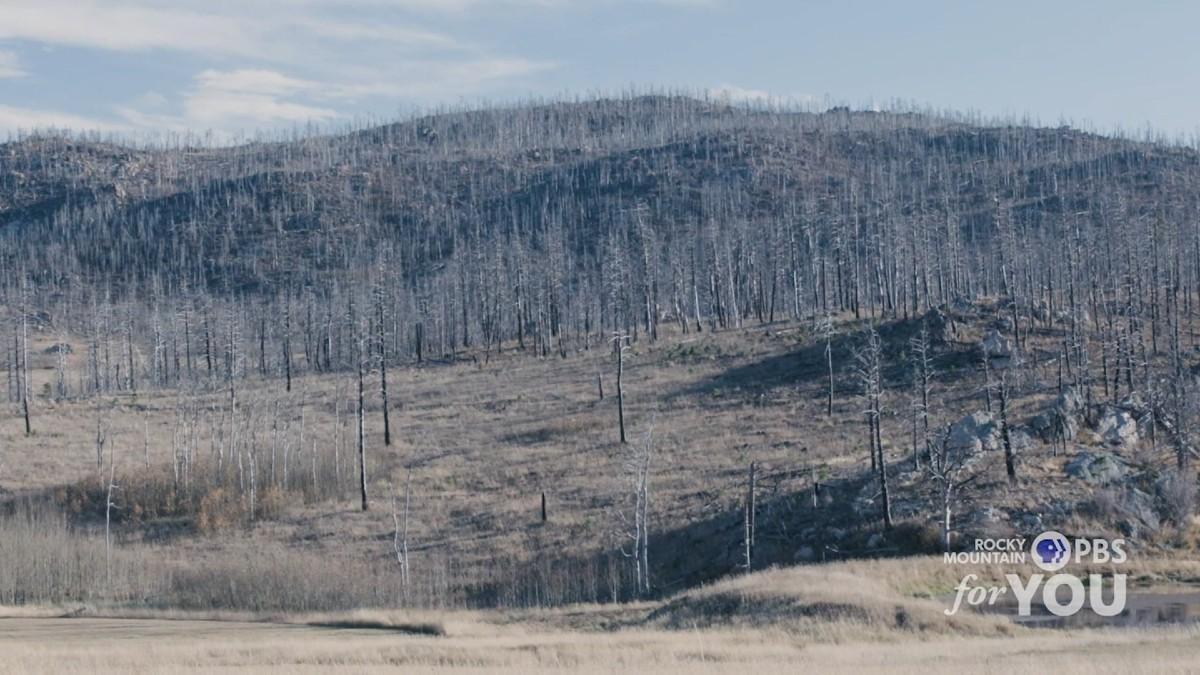
DENVER — “It is really clear that climate change is an issue and pollution is an issue throughout our state,” said Colorado State Representative Dominique Jackson (D-Aurora). “I don't think anybody can forget that they couldn't go outside last summer because of the fires—didn't matter where you lived, there was like ash all over your cars.”
New bills hope to "light that fire" and ensure Colorado meets its GHG reduction goals.
And climate change is already having disproportionate impacts on the state’s population.
“Industry actors that may or may not pollute tend to be historically placed in BIPOC communities, in predominantly Black and Brown communities,” Rep. Jackson said.
Colorado’s reduction goals were established in 2019 through House Bill 1261, also known as the Colorado Climate Action Plan to Reduce Pollution. The bill aims to reduce greenhouse gas (GHG) emissions from their 2005 levels by 26% by 2025, 50% by 2030, and 90% by 2050.
Rep. Jackson thinks of this as a ladder that Colorado will climb up, rung by rung. But the state is slipping.
“A lot of work has already gone on. We've already made a lot of progress. We've made a lot of reductions. But the problem is massive, and the consequences are getting worse, and we don't have unlimited time,” said Ariana Gonzalez, Climate & Clean Energy Director for Colorado at the National Resource Defense Council.
Colorado’s reduction goals and possible paths, as seen in the Colorado Greenhouse Gas Pollution Reduction Roadmap
Despite steps in the right direction—from coal plant closures across Colorado to renewable energy developments to the Governor’s GHG Pollution Reduction Roadmap—some are worried the state may not even reach its 2025 goals by 2030.
This is where policy comes back into the picture.
Rep. Jackson explained, “When we pass a law and it's not being enacted we have to ask the questions as to why…and if you need a little bit more direction to get it there and if we need to give it to you in the form of putting it into our state statutes, then that's exactly what we're going to do.”
Rep. Jackson was a sponsor of two bills in early 2021 that aim to solve both the “who” and the “how” of reaching the GHG emission reduction goals.
“We think of them as really complementary,” Gonzalez said of the bills.
Senate Bill 200 “shows the math,” as Gonzalez put it, while ensuring environmental justice work. The bill focuses on rule makings that will make sure Colorado hits each sector-specific target (i.e., buildings, transportation) that were outlined in the 2019 plan. It will also create an environmental justice ombudsperson and advisory board to make sure disproportionately impacted communities are seen and heard while reaching for those targets. As for financing this work, polluters will be paying for it through greenhouse gas fees.
Defined sectors and their GHG emissions (Credit: Colorado Greenhouse Gas Pollution Reduction Roadmap)
“In order to do some of this, we also need to know what equity looks like and what communities we're talking about,” Rep. Jackson said. That is why she, along with other state lawmakers, is introducing House Bill 1266. This bill will help define disproportionately impacted communities, determine the best outreach and involvement practices for those communities, and “come up with a comprehensive and statewide justice plan so they're kind of part and parcel of how we address climate,” Gonzalez explained.
However, since Senate Bill 200’s introduction earlier in 2021, Governor Jared Polis has publicly opposed the bill, asserting that it would place power in the hands of unelected state regulators where progress would be mandated rather than incentivized.
In order to avoid a veto, Senator Faith Winter (D) and Rep. Jackson—sponsors of SB21-200—are ditching the bill, and looking for a compromise in order to get essential elements of the bill passed into law.
Rep. Jackson said, “I’m glad we are having meaningful negotiations with the governor’s office…The bill we hope to get across the finish line in the waning days of this legislative session will combine elements of SB21-200 and HB21-1266 to reduce pollution in three out of the five biggest sectors. It will also give - for the first time – voice to impacted communities in several significant ways.”
And Rep. Jackson points out the work is not done. “With a growing coalition of over one hundred groups and broad public support for climate action, we will also continue to work on putting other parts of the governor's roadmap into law in the near future."
Gonzalez thinks bills like these are important because “they light that fire under us and they say let's get going, let's get to the nitty gritty, and let's get our targets reached.”
Gonzalez thinks such policies are relevant to everyone.
“For folks like me who last year could literally see wildfire flames from their back porch, this policy is for that,” she said. “This policy is for people who, like my mom, have asthma and when there's indoor and outdoor pollution because of fossil fuels—the burning of fossil fuel—that worsens their asthma. This is who that policy is for.”
Rep. Jackson pointed out that such policies do not “exist in a vacuum.”
“We are but conduits of the desires of our constituents in our communities and our neighbors… we are here to do the work of the people. This is the people's house,” she said. Whether Coloradans are for or against the bills, she encourages people to make their voices heard.
Related Stories
PBS NewsHour
Has the U.S. set realistic goals to combat climate change?
A climate scientist weighs in.
Greta Thunberg: A Year to Change the World
COVID-19's Impact on Climate
Greta learns how COVID-19 has affected carbon emissions on a global scale.