

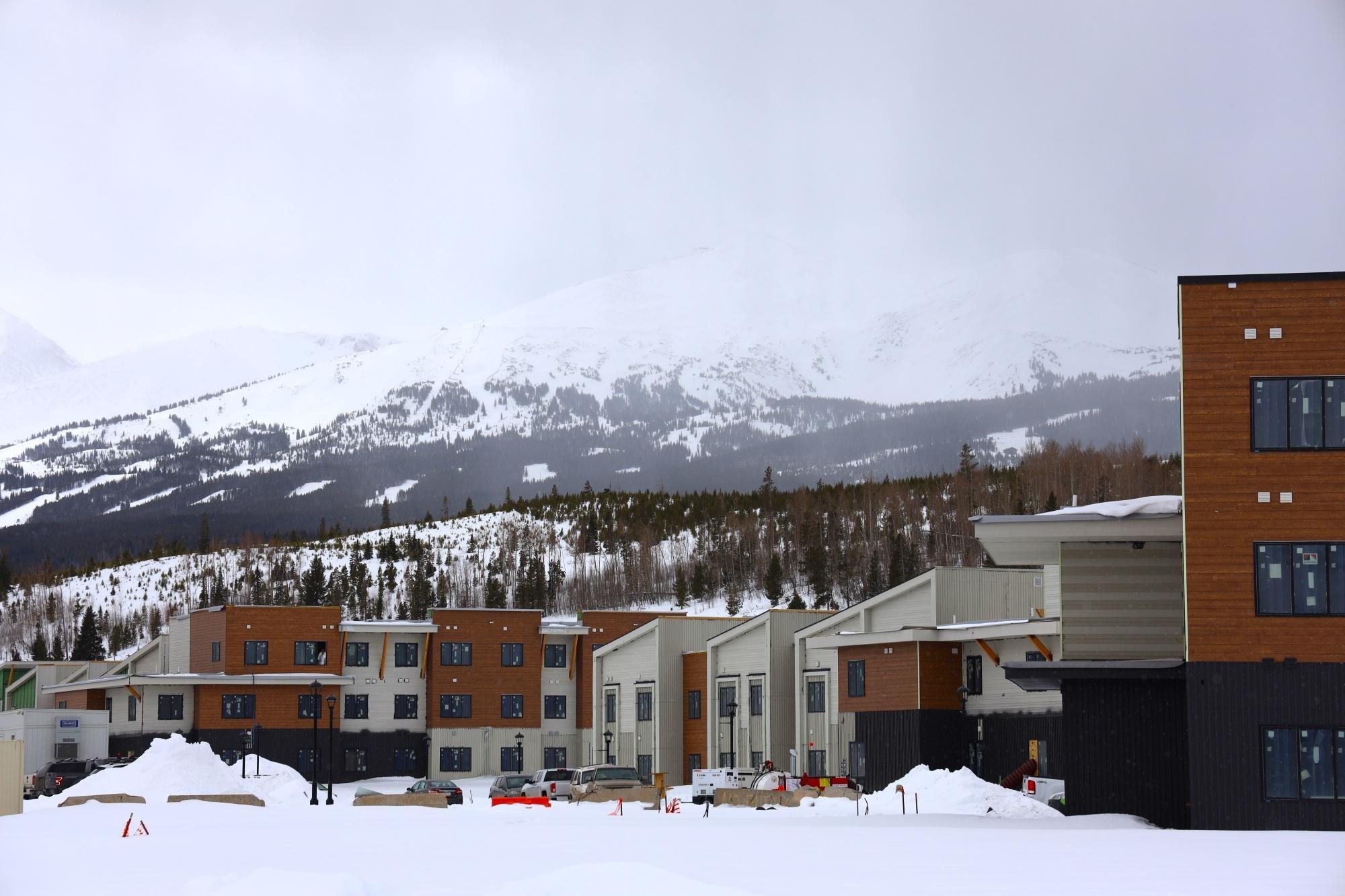
BRECKENRIDGE, Colo. — To the west of the Alta Verde community’s parking lot, the snow-capped peaks of the Tenmile Range create a natural skyline. The winding Blue River, currently masked by several inches — maybe feet — of snow, traces the edge of the workforce housing complex, situated at the northern tip of Breckenridge’s town limits.
Enjoying this idyllic vista in one of Colorado’s most-visited mountain towns is an opportunity many people want, but only a relative few will get the chance.
“We processed over 400 applications to fill this property of 80 units, and the trick up in the high country is affordability,” said Kimball Crangle, the Colorado president for Gorman & Co., the developers behind Alta Verde and many other affordable housing complexes in Summit County.
Alta Verde is an affordable, net-zero housing community. It exists at the convergence of two major issues afflicting Colorado’s mountain towns: the lack of workforce housing and the worsening climate crisis. As the need for housing locals continues to grow, town leaders are trying to find ways to limit the ecological damage of meeting that demand.
“You can’t afford to live over here anymore,” Nate Torres said of Breckenridge, where rent is 120% more expensive than the national median. “You can’t even get a room unless you’ve got employee housing because most of it is Airbnb stuff.”
Torres drives 45 minutes from his home in Park County to shovel snow from the sidewalks of Breckenridge's Main Street. He would prefer to live closer, but has not been able to secure housing in town on his $20 an hour wage.
Nate Torres drives from his home in Park County to Breckenridge, where he shovels snow for $20 an hour.
Photo: Kyle Cooke, Rocky Mountain PBS
In resort communities, the maxim is you either have three houses, or three jobs.
That is the experience of one of Alta Verde’s custodians, who also works at two restaurants in Breckenridge. Even with his three jobs, he still qualifies to live in affordable housing. He has been on the waitlist for Alta Verde since March of 2023, but every room is occupied and there are more than 300 people on the same list.
Other affordable housing buildings in Breckenridge have faced similar demand from residents. The Larkspur, a modular affordable housing complex, recently received 776 applications for 52 available units, the Summit Daily reported. Crangle expects a similar level of interest for Phase 2 of Alta Verde. She said they won’t open applications until three months before the complex is completed.
“Part of the reason we don’t do it sooner is because we know that it creates a huge amount of anxiety for folks and a flurry of activity,” Crangle said. “And the worst thing we can do as housing practitioners is deliver construction late, or not follow through, because this is people’s housing. It is their number one most important issue for their family and it becomes very emotional.”
Laurie Best, housing and child care planning manager for Breckenridge, said the town would hold an “unbiased lottery” to be as fair as possible to applicants. A resident of Breckenridge since 2000, Best said the town has changed a great deal.
“When I first started, the [housing] need was being driven by jobs — new jobs, new development. The economy was growing,” Best said.
“But at some point the need started being driven by the loss of units. They had been occupied by locals but the locals were selling them and moving away. For example: my unit. When I leave, it’s not going to be affordable to the next person who has my job.”
“I thought you were just going to give it to me,” Leas said. Best laughed.
“Remote workers. We had never heard of that before, and now all of a sudden, remote workers are competing with locals for housing,” Best said. “They could live and do their work anywhere in the U.S. — who wouldn’t want to do it here in Breckenridge? — but that takes a house away from a person who actually really does need to be here.”
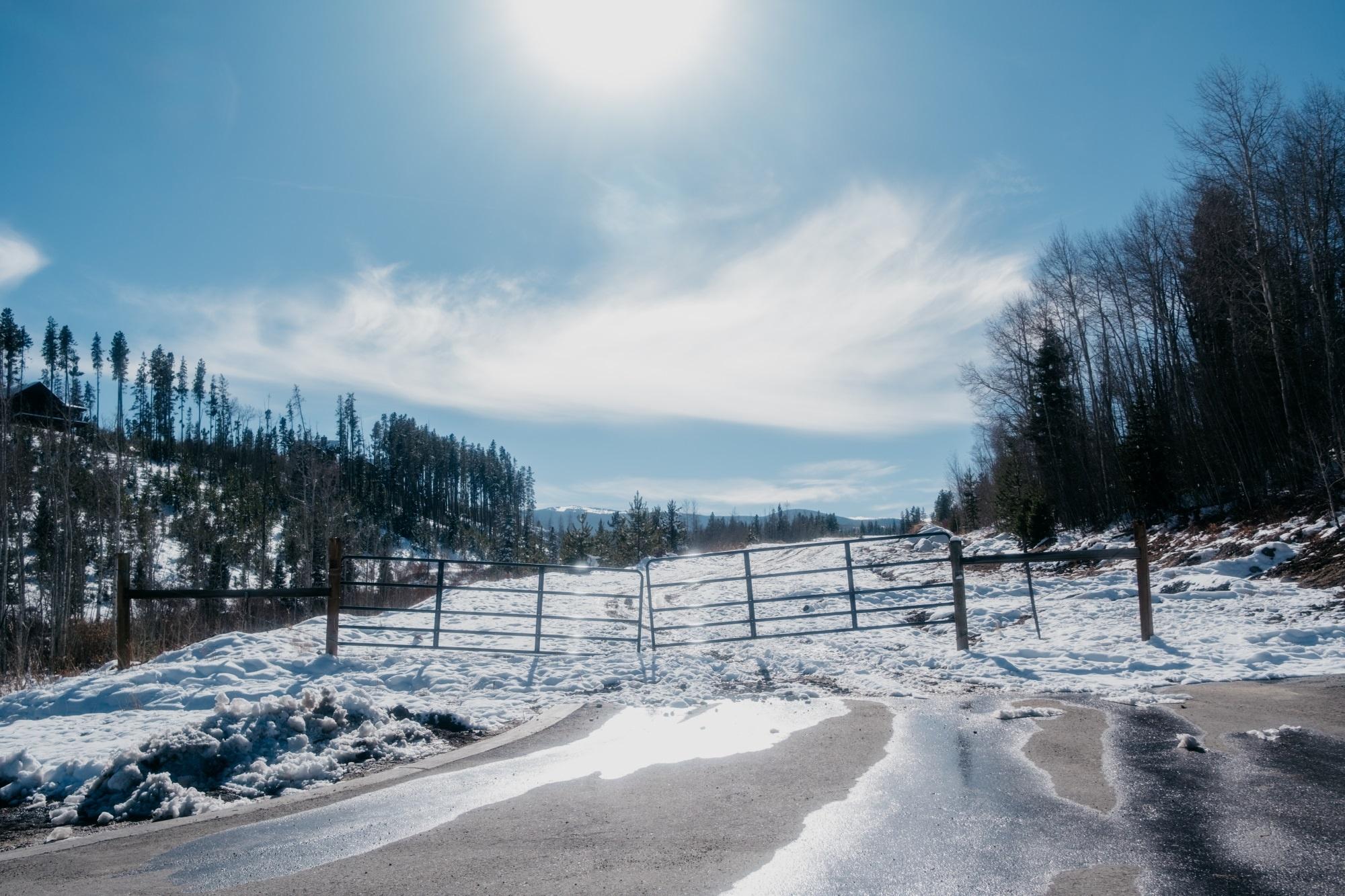
As a ski resort town, Breckenridge depends on snow to power the local economy and workforce. Studies show that our warming climate could impact spring skiing in Colorado.
Photo: Kyle Cooke, Rocky Mountain PBS
The Town of Breckenridge also considered the surrounding ecology when planning the Alta Verde community. The impacts of our warming climate are less conspicuous in ski resort towns like Breckenridge, where snow falls by the foot during winter. According to the Colorado Climate Change Vulnerability Study, Colorado’s “high elevation and cold temperatures provide a buffer against many of [climate change’s] effects, at least in the short term.”
Nevertheless, summers are warmer — 2023 was earth’s hottest year in recorded history — and according to NOAA’s Climate Resilience Toolkit, projections show that “Colorado’s springtime mountain snowpack will likely decline by 2050, with potential impacts on late-season skiing.”
One of the largest sources of greenhouse gas emissions in Breckenridge are buildings, according to Teddy Wilkinson, the town’s sustainability and alternative transportation administrator.
“We had this housing crisis happening and the town was getting very involved in building and developing housing, and we tried to marry those efforts together and say, ‘Hey, we can tackle housing problems and our climate problem and sustainability goals at the same time,’” Wilkinson said.
The exterior of the Alta Verde buildings are primarily sage green, black and natural wood colors. The roofs and carports are covered in solar panels, and the modern design of the homes is reminiscent of the minimalism that comes with Passive House construction, where air-tight windows and doors — as well as fewer nooks and crannies inside — lead to extreme energy efficiency.
“It’s just amazing that these people get to live in a building that’s also a power plant,” Wilkinson said. “They’re producing as much electricity as they’re using.”
While Alta Verde’s units don’t quite meet the standards of Passive House design, they do meet the criteria for the U.S. Department of Energy’s Zero Energy Ready Home program. This design helps the homes be affordable in perpetuity, said Melanie Leas, the construction manager for the Town of Breckenridge.
“You can put [solar panels] all over a building but if it’s not built tight, you’re just losing constantly,” she said. “That’s where we’ve been looking for more innovation.”
Phase 1 of Alta Verde — the 80 units Crangle mentioned — opened in December of 2022. The units house people making between 30-60% of the area median income (AMI), or $23,300-$46,560 a year for a one-person household. Crangle hopes Phase 2 will be completed by the end of the summer, and will provide 172 units for people making 80-120% AMI. Residents must work an average of 30 hours a week for a business located in and serving Summit County — the complex is not for remote workers.
Wilkinson said the town is also trying to limit the carbon footprint of Alta Verde residents’ transportation.
“There was a lot of concern of [building Alta Verde] on the edge of town and then everyone’s going to be driving into town,” he said.
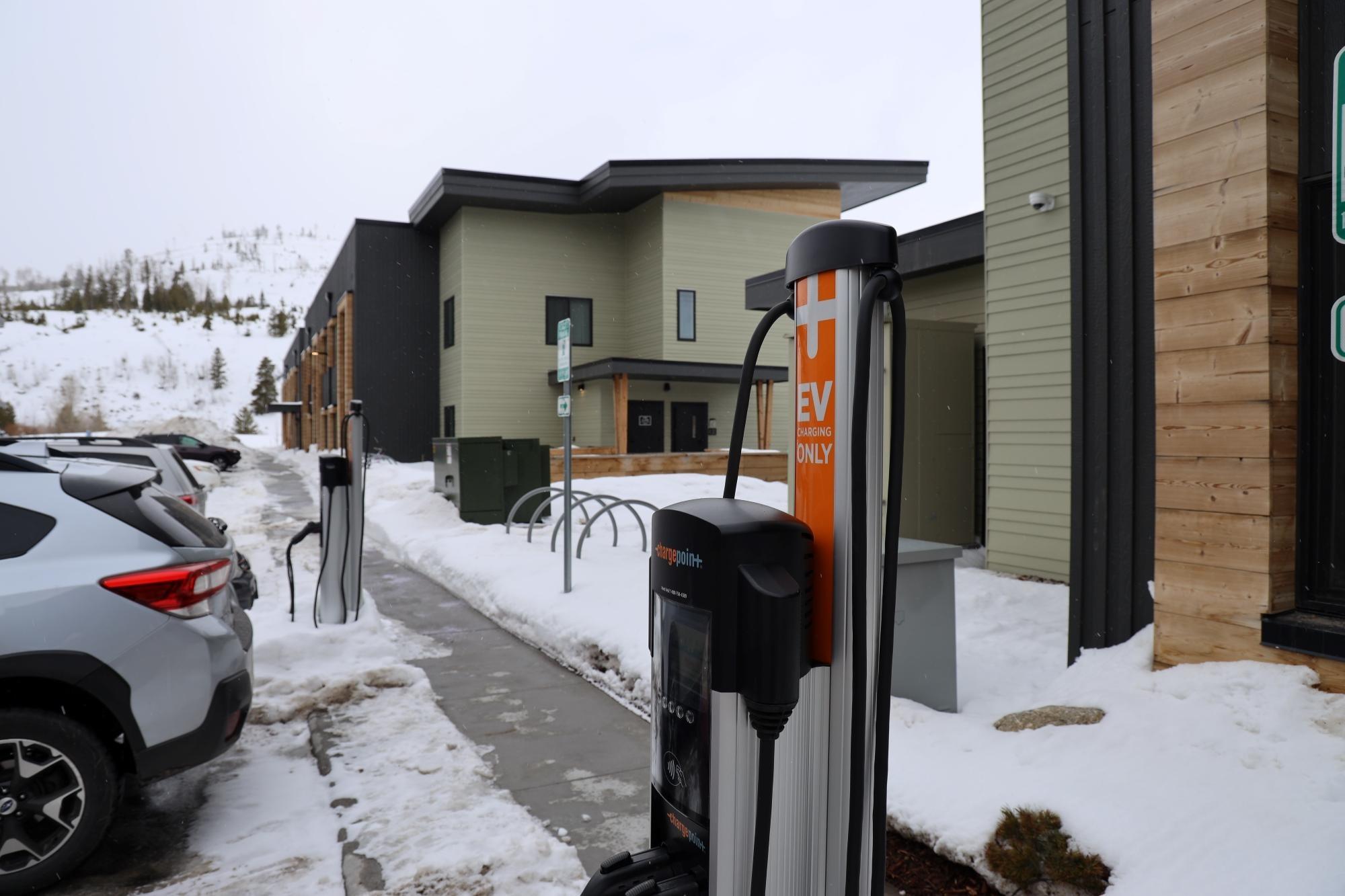
The Alta Verde residents have access to electric vehicle chargers, an e-bike program and the nonprofit Colorado CarShare. Breckenridge’s FREE RIDE bus system also added a new service line, aptly dubbed the Green Route, to reach the complex.